How Silent-Film Intertitles Shape Sound and Screen Rhythm
Silent-film intertitles shape sound and screen rhythm by timing music, effects, and pauses around text, helping viewers hear imagined speech and read each scene.
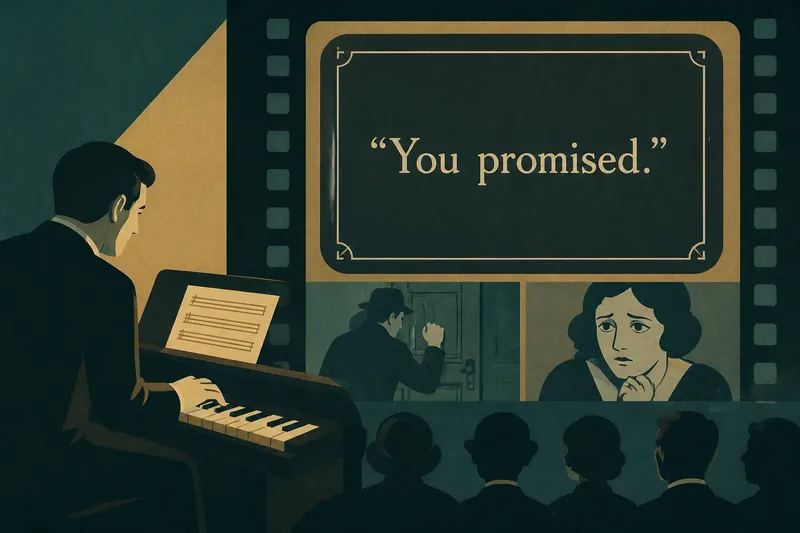
How can a silent-film intertitle change what a scene sounds like? In silent-film intertitles, a card can interrupt a chase, hold a reaction, or make a line seem to echo after the image has moved on. Though the actors’ recorded voices are absent, the card’s timing works with music, sound effects, and imagined speech to shape the scene’s rhythm.
Silent films were often accompanied by live music, and some screenings also used sound effects or spoken narration. The exact accompaniment could vary. Intertitles still gave filmmakers a visual way to cue how viewers might hear an exchange: a sharp command suggests a different rhythm from a confession, even when both appear as text.
Intertitles cue imagined speech and accompaniment
A dialogue intertitle presents a character’s words as text, often with a name or a clear visual cue identifying the speaker. The card stands in for a spoken line, then the film returns to faces and gestures. Viewers connect the words to the performance, while a pianist or ensemble could shape the mood through tempo and phrasing.
The same card can suggest different sound depending on its placement. A brief command before a quick movement may feel abrupt; the command after a pause may seem deliberate. The visual cut and musical accompaniment can reinforce that distinction without supplying a recorded voice.
Imagine a pianist accompanying a scene in which a character finds a locked door. The card reads, “You promised.” If it appears before the character pounds on the door, the music can build toward an expected confrontation. If it follows the pounding, the words may sound like a weary accusation in the viewer’s mind, with the accompaniment settling into a pause.
Card placement controls pauses and musical cues
An intertitle replaces the photographed action on screen, even if only briefly. Its position can create a pause for a musical phrase, separate two bursts of movement, or leave room for a sound effect such as a bell or a knock. The card’s duration and the accompaniment together determine whether the interruption feels tense, comic, or reflective.
Place a card before a character opens a letter, and viewers may wait for the reveal while the music sustains suspense. Place it after the character reads the letter, and the same words can clarify a reaction already seen. The difference is not just informational: it changes where a musical accent or silence may feel natural.
Say a traveler reaches an empty station, and the accompanying musician has a simple rising phrase ready. If the card “The last train has gone” appears before the traveler looks down the track, the phrase can lead into the search for the train. If it appears after the disappointed glance, the music can fall away with the character’s reaction. The text stays the same, but its position changes the cue’s purpose.
Reading pace leaves room for sound
A card must be readable at the pace of the film. Dense wording can hold the image away while the accompanist sustains a passage; a concise line gives the next gesture or musical cue room to arrive sooner. Familiar words, line breaks, type size, and contrast all affect how quickly a viewer can take in the text.
Editors and performers could coordinate a card’s appearance with the accompaniment. A card that ends just before a visual reveal can let a musical phrase resolve on the new image. If the text stays on screen through the reveal, the audience may divide attention between reading and watching, and the musical accent may land before the image has registered.
Intertitles help shape sound and screen rhythm?
Did silent films have music during screenings?
Many silent films were shown with live musical accompaniment, though the form and scale could vary by venue and screening. Intertitles offered a visible cue around which a performer could shape a pause or transition.
Could an intertitle replace a sound effect?
A card could state that a sound had occurred, but it did not reproduce the sound itself. A live accompanist or effects performer could add a musical or practical cue, while the text clarified what viewers should understand.
Why does an intertitle’s position affect the music?
Position determines whether the audience reads before or after an action or reaction. That order gives an accompanist different moments for suspense, emphasis, or release.
How can viewers notice the connection while watching?
Watch for the music’s pause, change, or accent around a card, then compare it with the image immediately before and after. The timing can show whether the accompaniment is anticipating an event or responding to one.
A close viewing reveals the cues around each card
To examine a sequence, note the image before the intertitle, the words on it, and the first image afterward. Then listen for where the accompaniment changes, pauses, or continues. This small comparison separates what the text tells you from what the music and editing invite you to feel.
For instance, imagine a viewer noting a card that reads “Come back” between a closed gate and a character turning away. The viewer records that the accompaniment continues without a strong accent, then watches the turn again. That sequence suggests the line is less a shouted command than a plea left unanswered. Silent-film intertitles shape sound and screen rhythm most clearly in these moments, where a written line, a musical choice, and a cut work together without a recorded voice.