The Dark-Scene Myth: Seeing Is Not the Same as Guessing
Dark scenes can remain clear without showing everything. Learn how contrast, visible detail, and selective light guide attention without erasing mystery.
Why can you follow a scene in near-darkness while still being unable to see every face or object? A dark scene can be clear because the image gives your eye a few reliable signals: a bright edge, a readable silhouette, or a patch of detail against shadow. Darkness is not the same as missing information. It becomes confusing when the image withholds the signals needed to understand what is happening.
Darkness describes brightness, not clarity
Brightness is how light or dark an image appears overall. Clarity is whether its important parts can be distinguished and understood. The two qualities interact, but they are not identical. A dim frame can communicate a character’s position, direction, and reaction, even if much of the room remains unseen. A bright frame can be hard to read if its subjects blend into a pale background or compete for attention.
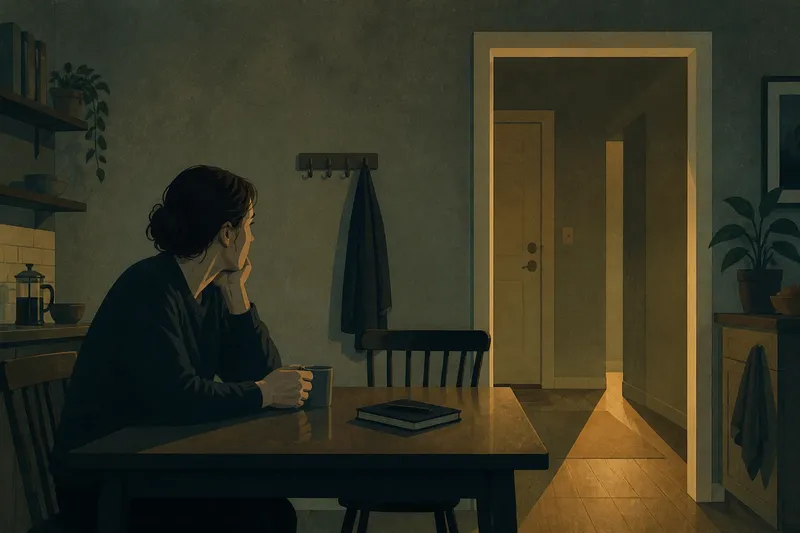
Film viewers do not need equal access to every part of a frame. They need enough information to make sense of the current beat. If someone is listening at a doorway, the scene may need to show the listener’s posture and the door’s outline, not every object in the adjoining room. The darkness can preserve uncertainty about what lies beyond while leaving the immediate action legible.
This distinction helps separate a deliberate visual choice from a technical problem. A shadow is expressive when it conceals some information while preserving a useful cue. It is merely obstructive when viewers cannot tell which figure moved, what changed, or where to look. The question is not “Can I see everything?” but “Can I read what matters at this moment?”
Contrast gives the eye a place to begin
Contrast is a difference between areas of an image. It can come from light against dark, but also from color, shape, texture, or sharpness. In a dim scene, a small contrast may do more than raising the brightness of the entire frame. A face turned toward a weak lamp may emerge from a dark wall; a hand may register because it crosses a lighter surface.
The eye tends to notice differences before it interprets their meaning. A narrow highlight on a cheek first marks a shape. The viewer then recognizes a face, and the face’s expression may explain the character’s response. This sequence can happen without the scene exposing the whole face. Selective visibility is the practice of revealing enough of an object or person for the viewer to identify or interpret it, while leaving other parts hidden.
Contrast also depends on what surrounds the subject. A moderately lit figure can stand out in a dark room, while the same figure may disappear against a similarly toned wall. The subject’s outline, clothing, and background therefore matter alongside the light falling on the subject. A dark jacket against a dark doorway may merge into one shape; a turned shoulder or a slight difference in background tone can separate them.
Not every dark area needs a bright outline. If every face, object, and corner receives an equally strong highlight, the frame may lose its hierarchy. The useful question is which difference should catch attention first, and which details can remain secondary. That decision gives the scene a visual order without making all of its information equally available.
Selective visibility controls what viewers know
A film image can guide attention by controlling when a detail becomes visible. A character’s eyes may stay hidden until a small turn catches light. A doorway may remain a black shape while a hand appears briefly against its frame. The viewer receives a clue, but not a complete inventory of the space.
This creates a distinction between seeing and knowing. Seeing a shape does not necessarily explain what it is. A vague form at the back of a room can be visible enough to attract attention, yet ambiguous enough to invite a question. The scene can use that gap deliberately. If the shape is irrelevant, the ambiguity may distract; if it matters, the viewer’s uncertainty becomes part of the experience.
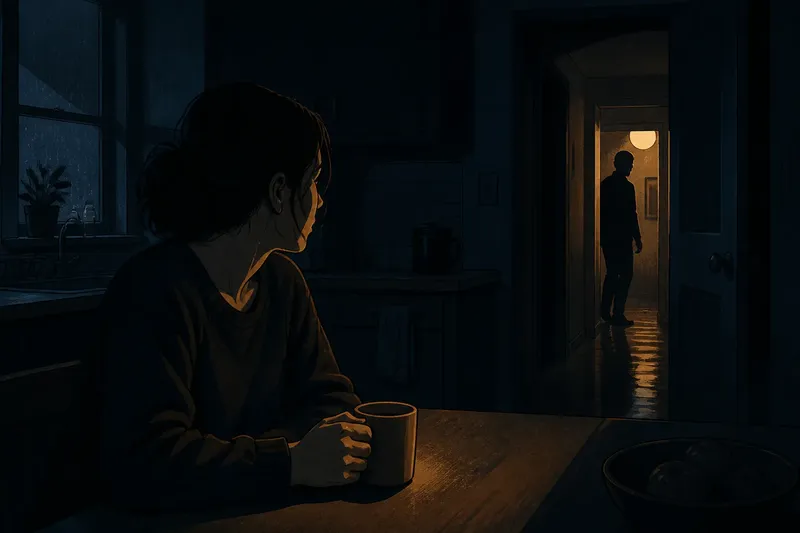
Consider a simple invented scene: say a character waits in a dim kitchen while someone moves in the hall. The action is to keep the kitchen mostly dark but let a strip of light reveal the waiting character’s hand tightening around a cup. The expected observable result is that viewers can follow the character’s tension while remaining unsure who is in the hall. The scene communicates a reaction without answering the larger question.
That balance is delicate. If the hand disappears into black, the reaction may not register. If the hall is lit clearly, the uncertainty vanishes. If an unrelated object is brighter than both, attention may drift. Selective visibility works when the visible cue supports the scene’s immediate meaning and the hidden information has a reason to remain hidden.
Why do some dark scenes feel readable?
Does a dark scene need a visible face?
No. A face is only one way to communicate emotion or attention. Posture, head direction, a hand’s movement, or the spacing between figures can make the action understandable when facial features remain in shadow.
What is the difference between shadow detail and a black shape?
Shadow detail is texture or form that can still be distinguished within a dark area, such as folds in a coat or the edge of a chair. A black shape has little internal information, but its silhouette may still be clear enough to read.
Why can a small light source guide attention?
A small source can create a concentrated patch of visibility against a darker field. The source itself need not be the only focus; the surfaces it reveals can direct the eye toward a face, gesture, or change in the room.
When does darkness become confusing rather than expressive?
It becomes confusing when viewers lose the cues needed to track the action or identify the scene’s important subject. If the intended uncertainty is about the event, rather than the scene’s basic geography, the darkness may be hiding too much.
Light sources shape the scene’s visual logic
A visible lamp, window, television, or streetlight gives the audience a reason for a patch of brightness. This is often called a motivated light source: a source that appears to belong to the scene and helps the lighting feel coherent. The source does not have to explain every shadow. It gives viewers a practical clue about why some surfaces are visible and others are not.
The source’s position changes what it reveals. Light from a window can catch the side of a face while leaving the far side dim. A television can shift across a character’s features as its screen changes. A lamp near a doorway can make the threshold readable while leaving the room beyond indistinct. These choices do more than establish a light level; they organize the viewer’s access to the space.
Color can add another layer. A cool window light and a warmer lamp may separate two parts of a room even when neither is especially bright. The color difference helps distinguish surfaces and suggests different visual zones. It should still support the image’s priority: if color contrast calls attention to a curtain when the scene depends on a quiet glance, the emphasis may be misplaced.
Light also changes with movement. A person crossing a doorway can pass from a readable outline into a less defined area. That transition makes darkness active: the frame changes what the viewer can know as the character moves. For the effect to work, the movement needs a clear visual relationship to the setting, such as a figure crossing a lit wall or leaving a window’s spill.
Viewing conditions can alter the impression
A dark image does not reach every viewer under identical conditions. A bright room can make shadow areas harder to distinguish. A display with strong glare or a picture setting that crushes dark tones can flatten differences that were meant to remain visible. Conversely, lifting every shadow on a screen may reveal details that the image was designed to conceal.
When a scene seems unreadable, it helps to separate the viewing setup from the image’s visual design. Reduce room glare, check that the display is not using an unusually vivid or overly dark mode, and consider whether the scene’s broad action remains understandable. Do not assume that every shadow should be brightened. The intended effect may depend on some details staying hidden.
For filmmakers and editors, the same principle applies across the viewing chain. A composition that looks legible on one monitor may lose subtle differences elsewhere. The aim is not to make every dark surface bright, but to preserve the distinctions that carry the scene’s meaning: a figure against a wall, a gesture against clothing, or a doorway against the room around it. How those distinctions appear depends on the display and viewing conditions, so evaluate them in the context where the audience is likely to watch.
Dark-scene clarity depends on useful signals
The dark-scene myth treats visibility as an all-or-nothing choice: either reveal the whole image or leave viewers guessing. Film can do something more precise. It can make one gesture clear, keep a face partly hidden, and leave the space beyond uncertain. Contrast, silhouette, source direction, color, and movement all help decide which information arrives first.
When you watch a dim scene, notice the first detail your eye finds and what that detail lets you understand. Then notice what remains withheld. That small distinction is a useful way to read dark-scene lighting: the image may not be asking you to see everything, but it should give you a reason to know where to look.