Why the Edge of the Frame Changes a Scene
Why the edge of the frame changes a scene: learn to direct attention toward or away from image borders so space, absence, and waiting presence register.
Why does the edge of the frame change a scene? In a tense shot, viewers may keep watching an empty doorway or a strip of darkness even while the actor speaks. The border of the image helps decide whether that space feels irrelevant, available, or charged with something just outside view.
That effect can be difficult to control. A frame may accidentally draw the eye away from a face, make a room feel smaller than intended, or suggest an unseen presence when the scene needs none. Treat the edges as active parts of the composition, then diagnose what viewers are likely to notice and adjust the image accordingly.
When viewers look away from the subject
What usually causes it: The subject may be near the center, yet a bright window, high-contrast object, or strong line at the border pulls attention outward. The viewer’s eye responds to visual emphasis, not only to the story’s intended focal point. A bright coat at the far edge can compete with a quiet face.
What to try: Check the still frame at its intended display size. Look first at the corners and side borders, then ask whether any bright patch, sharp shape, or isolated object competes with the action. If it does, consider changing the actor’s position, simplifying the background, or adjusting the camera angle. A small shift can place the distracting object behind the subject or outside the image.
Do not assume every edge detail is a distraction. A lamp, doorway, or shelf can help orient the viewer. The useful question is whether it supports the scene’s attention or asks to be read as a separate event. If a detail matters, give it enough visual clarity to register; if it does not, reduce its emphasis.
When a crowded border makes the image feel cramped
What usually causes it: Objects close to the frame can appear to press against the actors, especially when they are cut off abruptly. A chair clipped at the bottom or a person cropped at the shoulder may feel accidental if the composition offers no reason for the cut. Several partial shapes along the borders can also make the room seem cluttered.
What to try: Decide whether the scene should feel enclosed. For deliberate pressure, let a foreground object intrude in a clear, controlled way, such as a doorframe that narrows the view of a character. For a calmer impression, move the camera or subject so the border no longer slices through important shapes. Check all four sides rather than only the top and bottom; a small sliver at the left can remain visually loud.
Compare the shot with its neighboring shots, too. A tight composition can feel purposeful after a wider view establishes the room. Without that context, the same crop may simply obscure where people are. The edge works best when the viewer can tell whether the scene is closing in or merely hiding information.
When empty space feels meaningless
What usually causes it: Open space at the side of an actor can read as unused room if nothing in the scene gives it a role. A character looking toward an empty margin may seem to be gazing at nothing, unless the gaze, posture, or surrounding layout implies expectation.
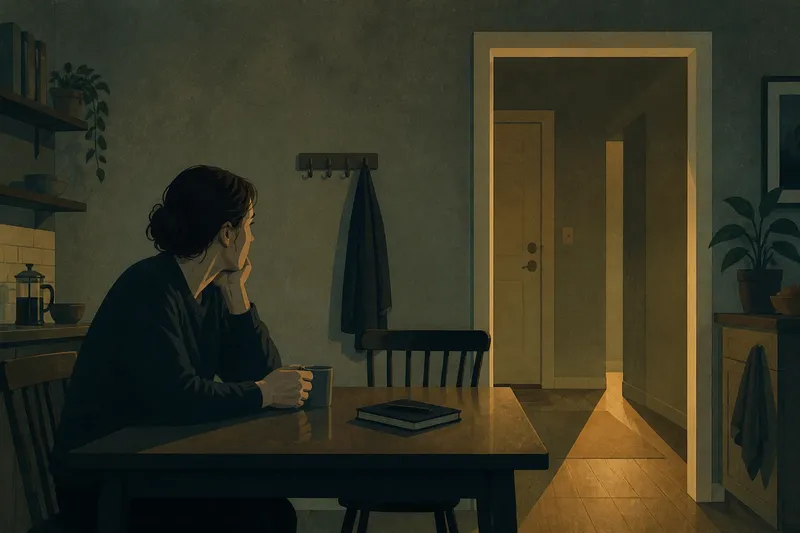
What to try: Give the empty area a relationship to the character. Let the actor look toward it, turn a shoulder toward it, or pause before crossing it. You can also place a threshold or a path of light in that space to suggest where attention could travel. The point is not to fill every gap; it is to make the gap legible as a choice.
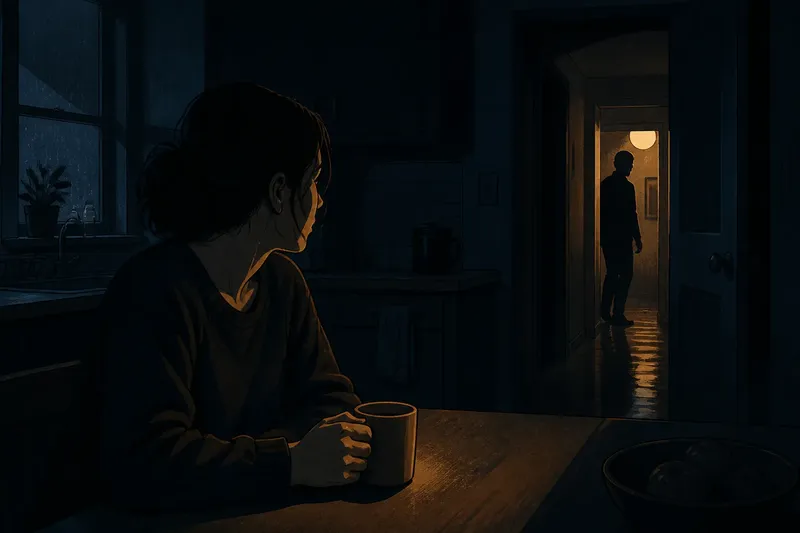
Say you are staging an invented scene in which a person waits in a kitchen for someone who has not arrived. If the actor sits facing a blank wall, the open side of the frame may feel arbitrary. If the actor sits turned toward the unoccupied doorway, the same empty area can register as the person’s expectation. The observable change is that the doorway becomes part of the character’s attention without anyone entering it.
When the frame implies someone just out of view
What usually causes it: An edge can suggest an unseen person or object when a character looks toward it, leaves room beside them, or reacts to a sound from beyond the image. But the suggestion may become confusing if the composition gives no clue about what the character has noticed.
What to try: Provide a readable cue while withholding the thing itself. A brief turn of the eyes, a pause in movement, or a slight shift in the character’s stance can direct attention toward the border. Keep the cue proportionate to the intended uncertainty. A sharp recoil suggests a stronger threat than a quiet glance; choose the response that fits the scene.
Use the edge to preserve uncertainty, not to conceal basic geography. If the character is looking toward frame right, the viewer should have some sense of where that direction leads, even if its contents remain unseen. A prior view of the room or a consistent screen direction can supply that orientation.
When an edge crop looks like an accident
What usually causes it: A crop can feel careless when it cuts through a meaningful object at an awkward point or changes the apparent size of a person without a clear purpose. Cropped objects invite viewers to imagine what continues beyond the border, so an imprecise cut can create unintended questions.
What to try: Review the image for recognizable shapes cut at their most distinctive points: a face, hand, sign, or doorway. Decide whether the cut should make the viewer complete the missing shape or simply remove it from consideration. If the remaining fragment attracts too much attention, reframe to show more of the object or less of it, rather than leaving a thin, ambiguous remnant.
Also consider motion. A person entering or leaving the image makes the border feel like a passage. A stationary figure clipped at the edge may instead look stranded. Give the movement enough room to read, or hold the composition still long enough for the viewer to understand that the partial view is intentional.
How should you judge the frame’s edges?
Should every important object stay away from the border?
No. An object near the edge can create tension, scale, or a sense of a larger space beyond the image. Keep it there when its placement contributes to the scene, and check that it does not compete with the intended focal point by accident.
Can an empty corner make viewers expect something?
Yes, especially when a character’s gaze, body angle, or a visible entrance directs attention toward it. Without such a cue, the corner may read as ordinary background rather than a place where an event could occur.
How can you tell if a crop is distracting?
Pause on the frame and notice what attracts your eye before you identify the main action. If a clipped object or bright sliver keeps drawing attention, test a small reframing or a simpler background and compare the results.
Does the frame edge mean the same thing in every shot?
No. A border can feel open in a wide view and restrictive in a close view, and its meaning also depends on what the character sees and how the surrounding shots establish the space. Judge it in context rather than treating a particular placement as a fixed rule.
When the edge competes with the scene’s purpose
Return to the scene’s central question: should the viewer feel oriented, boxed in, expectant, or uncertain about what lies beyond the image? Then inspect each border for the visual cues that create that response. A doorway can establish a route; an empty margin can hold a character’s attention; a cropped object can suggest continuation outside the shot.
For a practical final check, view the frame without dialogue and note where your eye goes first, then watch it with the actor’s movement. If the border pulls attention in a way that contradicts the intended feeling, adjust the composition or strengthen the cue that explains it. The edge of the frame changes a scene most effectively when it gives the viewer a reason to look there—or a reason to wonder what remains unseen.